Building Confidence in Shy and Nervous Dogs
Helping Your Dog Feel Safer, Braver, and More Comfortable in the World
Building Confidence in Shy and Nervous Dogs
Helping Your Dog Feel Safer, Braver, and More Comfortable in the World
Some dogs seem to take everything in stride. They happily meet new people, explore unfamiliar places, and walk into new situations without a second thought.
Other dogs need more time.
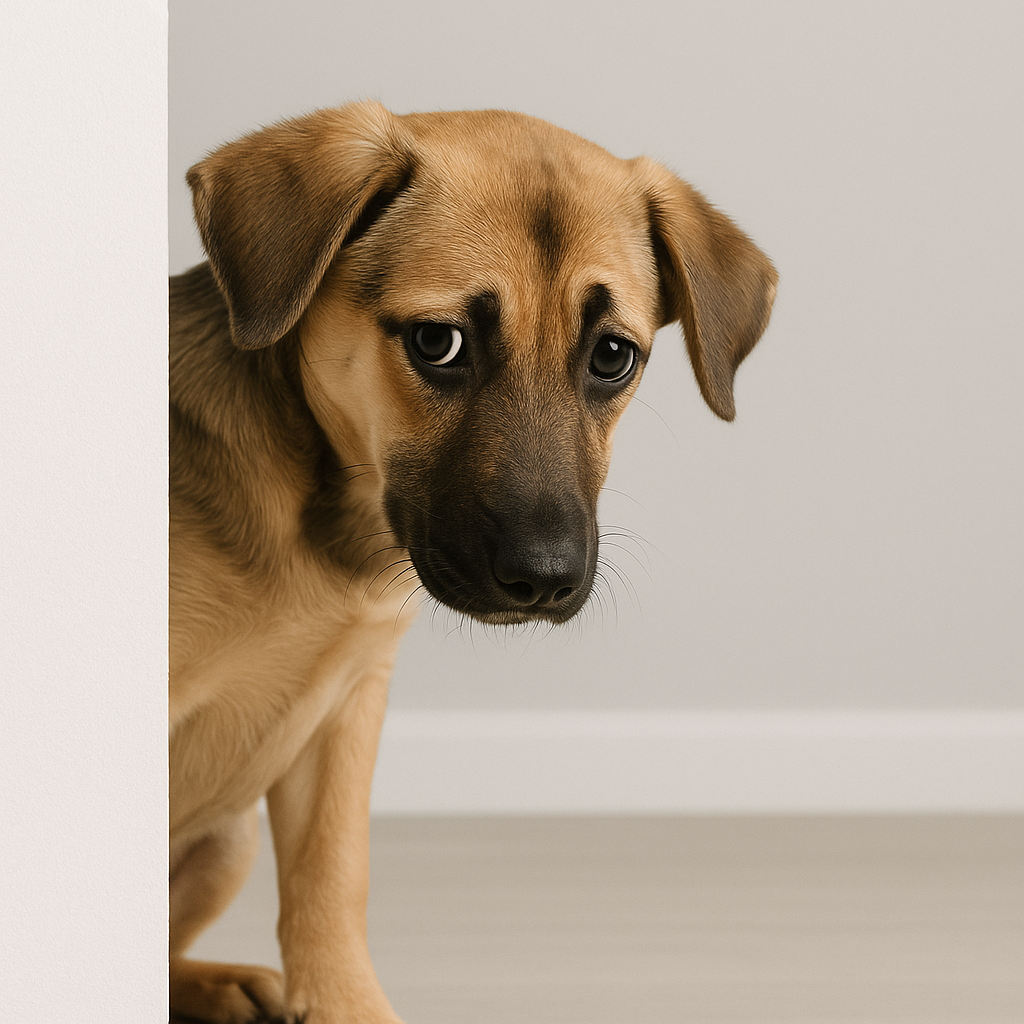
A shy or nervous dog may hide behind their person, avoid eye contact, freeze when approached, bark or growl when someone gets too close, hesitate to explore new places, or become overwhelmed by unfamiliar sights and sounds. Some dogs may even appear completely comfortable at home but struggle once they step outside their familiar environment.
If you have a nervous dog, it can be easy to wonder, “How can I help my dog become more confident?”
The answer usually isn't to push them into the things that scare them.
Confidence is built through trust, patience, and small experiences that teach your dog, “I can handle this.”
Understanding Shyness and Nervousness
Dogs can become shy or nervous for many different reasons.
Some dogs may have had limited socialization as puppies. Others may have experienced something frightening or overwhelming. Genetics, temperament, previous experiences, changes in their environment, and lack of exposure to certain situations can all play a role.
Rescue and adopted dogs may also need time to adjust to their new surroundings and learn that their new family is a safe place.
And just like people, dogs have different personalities.
One dog may confidently walk into a busy park while another may find the same environment overwhelming. Neither dog is necessarily doing anything wrong—they simply have different comfort levels.
Understanding this is an important first step.
Fear Is Communication
When a dog hides, backs away, freezes, barks, growls, or tries to escape, they are communicating that something feels uncomfortable or unsafe.
Rather than thinking, “My dog needs to get over it,” try asking:
“What is my dog trying to tell me?”
Once we understand what is causing discomfort, we can begin helping the dog feel safer.
Don't Force Your Dog to Face Their Fears
One of the biggest mistakes we can make with a nervous dog is asking too much too soon.
For example, if your dog is afraid of strangers, taking them to a crowded event and encouraging everyone to pet them may seem like a way to help them “get used to people.”
Unfortunately, this can have the opposite effect.
If your dog feels trapped and unable to move away from something frightening, their fear may increase. A dog who repeatedly feels overwhelmed may begin reacting sooner or more intensely in the future.
Instead, give your dog the opportunity to experience new things at a distance where they still feel safe.
Your goal isn't to make your dog interact.
Your goal is to help your dog learn:
“I can see that person, dog, bicycle, or new environment—and I'm okay.”
Let Your Dog Have a Choice
Choice can be incredibly powerful for a nervous dog.
Whenever it is safe to do so, allow your dog to decide whether they want to approach something unfamiliar.
For example, if your dog is nervous around a new person, ask the person to ignore your dog. No reaching, staring, calling, or trying to pet them.
Give your dog space.
Your dog may eventually decide to move closer on their own.
That voluntary approach is much more meaningful than being pulled or encouraged toward someone before they are ready.
You can also give your dog opportunities to choose where they want to sniff on a walk, which direction to explore in a safe area, or whether they want to investigate a new object.
Small choices can help build confidence.
Use Distance to Your Advantage
Distance is one of the most useful tools when working with a nervous dog.
If your dog becomes uncomfortable when someone approaches within 10 feet, you don't need to practice at 10 feet.
Start at 20 feet—or whatever distance allows your dog to remain relaxed enough to think, learn, and respond to you.
At that distance, you can reward calm behavior and gradually build positive associations.
Over time, you may be able to decrease the distance.
But there is no need to rush.
A dog who is calm farther away is making progress, even if they aren't ready to get closer yet.
Reward Brave Choices
Confidence-building isn't about forcing a dog to be brave. It's about noticing and rewarding the moments when they make a good choice.
Maybe your dog:
- Looks at a stranger and then looks back at you
- Sniffs something unfamiliar
- Walks past a new object
- Steps onto a different surface
- Investigates a new room
- Remains calm when another dog passes
- Recovers quickly after hearing a loud noise
- Approaches something new and then chooses to walk away
These moments may seem small, but they are important.
Reward them!
You can use treats, praise, toys, sniffing opportunities, or simply give your dog space to continue exploring.
Confidence grows from many small successes—not one giant leap.
Build Confidence Through Training
Training isn't only about teaching obedience commands. It can also help a nervous dog learn how to communicate with their person and feel successful.
Simple behaviors such as:
“Look at Me”
“Touch”
“Sit”
“Down”
“Place”
“Let's Go”
can become useful communication tools.
For example, teaching “Touch” gives your dog a simple behavior they can perform when they aren't sure what to do. “Look at Me” can help them reconnect with you when something around them becomes distracting.
Every time your dog successfully responds to a cue, they have another opportunity to think:
“I know what to do, and I can do it.”
That feeling of success can go a long way toward building confidence.
Create a Safe Place at Home
Confidence-building doesn't have to happen only on walks.
Your home should be a place where your dog can relax and feel safe.
Give your dog a comfortable area where they can retreat when they need a break. This might be a bed, crate, mat, or quiet corner.
Teach family members—especially children—to respect that space.
If your dog goes to their safe place, allow them to rest without being followed, hugged, or pulled out.
Having a predictable place to decompress can help a nervous dog feel more secure throughout the day.
Introduce New Experiences Slowly
New experiences don't always have to mean big adventures.
You can build confidence by introducing small changes at a pace your dog can handle.
Try:
- Walking on a different but quiet street
- Exploring a new part of a familiar park
- Walking over different surfaces
- Seeing bicycles or scooters from a comfortable distance
- Listening to unfamiliar sounds at a low intensity
- Introducing new objects around the house
- Practicing calm car rides
- Visiting a quiet pet-friendly location
- Exploring a new room or outdoor space
Watch your dog's body language and adjust the difficulty as needed.
If your dog becomes overwhelmed, make it easier rather than pushing forward.
Learn to Read Your Dog's Body Language
One of the best things you can do for a nervous dog is learn to recognize their early signs of discomfort.
These might include:
- Turning their head away
- Lip licking
- Yawning when they aren't tired
- Avoiding eye contact
- Lowering their body
- Tucking their tail
- Ears held back
- Trying to hide behind you
- Freezing
- Panting when it isn't hot
- Pacing
- Barking or growling
These behaviors can be valuable information.
Your dog may be telling you, “I need a little more space.”
When we listen to those early signals, we have an opportunity to help before the dog feels the need to escalate their behavior.
Confidence Doesn't Mean Your Dog Has to Love Everything
This is an important distinction.
A confident dog doesn't necessarily want to greet every person or play with every dog.
Confidence can simply mean your dog feels comfortable saying:
“I don't want to interact, so I'm going to stay with my person and move on.”
That's a wonderful skill.
Our goal isn't to turn every shy dog into the most social dog at the park.
Our goal is to help them feel safe, understood, and capable of navigating the world.
Celebrate Progress, Not Perfection
Progress with a nervous dog can sometimes be difficult to notice.
Maybe your dog used to bark when someone was 30 feet away and now they can remain calm at 20 feet.
Maybe they used to hide when visitors arrived and now they stay in the room.
Maybe they used to freeze when they saw another dog and now they can look at the dog and then check in with you.
Those are successes.
Don't compare your dog's progress to another dog's progress.
Compare today's dog to yesterday's dog.
Confidence grows little by little, and those little victories add up.
When to Get Professional Help
If your dog's fear is severe, worsening, or interfering with everyday life, working with a qualified professional can make a big difference.
Professional support can be especially helpful if your dog:
- Regularly tries to escape or hide
- Cannot settle in common environments
- Reacts strongly to people or dogs
- Has begun growling, snapping, or biting
- Has difficulty recovering after something frightening
- Is becoming increasingly fearful
- Has suddenly developed significant fear or behavior changes
A personalized training plan can help identify your dog's triggers, determine appropriate distances, create manageable exercises, and give you practical steps to work on at home.
In some situations, it may also be appropriate to involve your veterinarian to rule out medical contributors to a sudden or significant behavior change.
Your Dog Doesn't Need to Be Fearless
One of the most rewarding parts of working with a shy or nervous dog is watching their confidence grow.
Maybe it's the first time they willingly approach a new person.
The first time they confidently walk into a new place.
The first time they hear a strange sound and look to you instead of panicking.
Or simply the moment they realize they can trust you to help them through something difficult.
Confidence isn't about never being afraid.
It's about learning that scary or unfamiliar things can be manageable—and that your person is there to help.
With patience, consistency, thoughtful training, and plenty of small successes, even a very nervous dog can begin to feel more comfortable in their world.
And sometimes the biggest transformation isn't that the dog becomes a completely different dog.
It's that they become more comfortable being themselves.
Helping Your Dog Build Confidence
At Best Buddies Dog Training, training is about more than teaching commands. It's about building communication, trust, and a stronger relationship between dogs and their people.
If you have a shy, nervous, or easily overwhelmed dog, a personalized training plan can help you understand what your dog is communicating and give you practical ways to help them feel more confident.
Bringing The Best Out of Your Buddy!
Serving Golden, CO and surrounding areas. Call 720-722-2519 to set up a free consulation!