Tools of the Trade: Harness vs. Collar vs. Head Halter
Harness vs. Collar vs. Head Halter
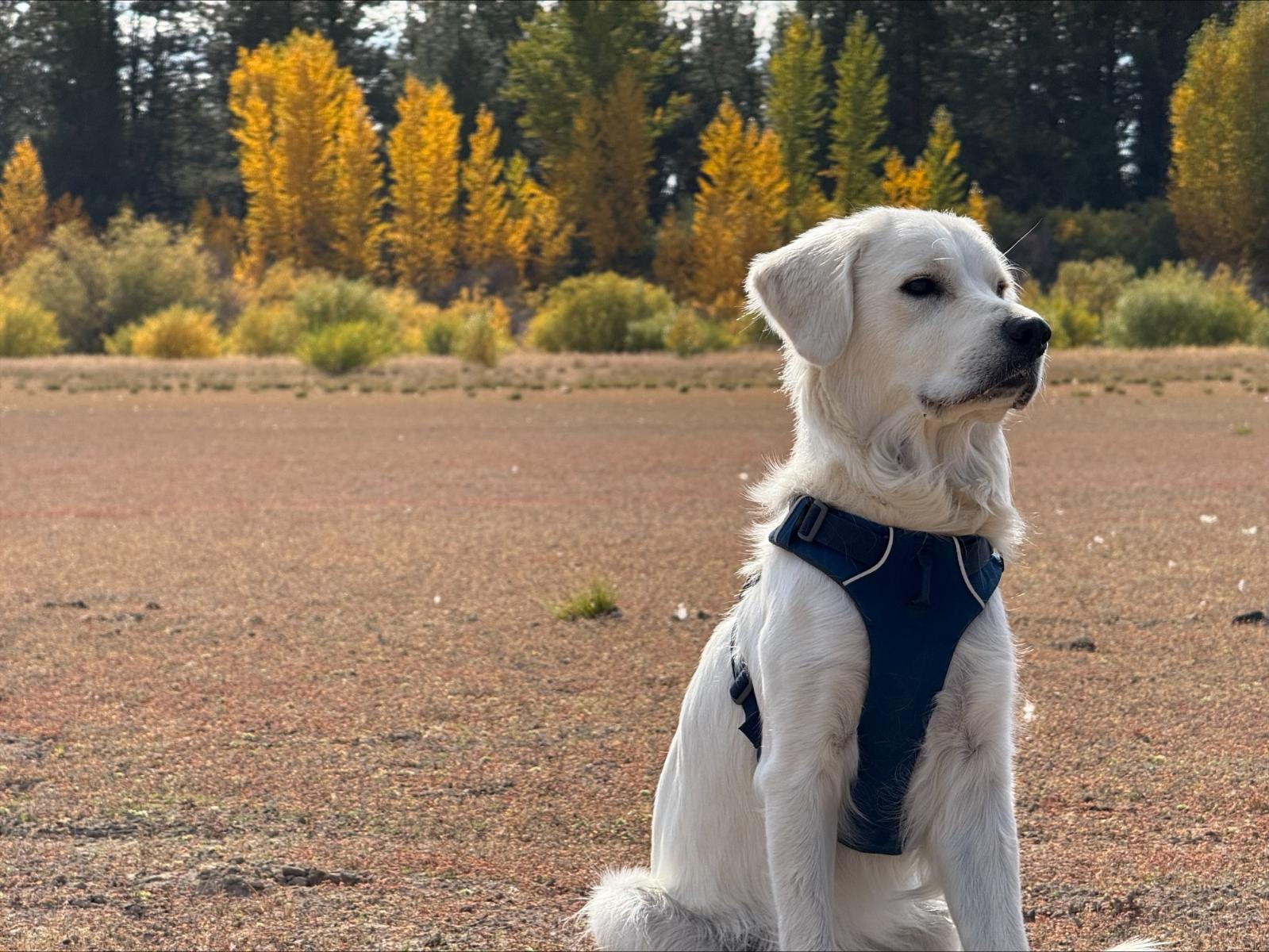
Tools of the Trade: Harness vs. Collar vs. Head Halter
Choosing the right walking equipment for your dog can make training more comfortable, safer, and more successful. But with so many options available, how do you know what is right for your dog?
When it comes to dog training, there isn't one piece of equipment that works perfectly for every dog. A collar, harness, or head halter can each have a place in training depending on your dog's size, behavior, walking habits, comfort level, and individual needs.
The most important thing to remember is that equipment is a training tool—not a substitute for training. The goal is to teach your dog how to walk comfortably with you, respond to you, and make good choices even when distractions are around.
Let's look at some of the most common options.
Collar: Simple and Familiar
A flat collar is one of the most common pieces of equipment for dogs. It is lightweight, easy to use, and can be a good choice for dogs who already walk nicely on leash.
A collar can work well for:
- Dogs who don't pull on leash
- Dogs who are comfortable walking beside their person
- Short, calm walks
- Training basic leash skills
- Holding identification tags
However, if a dog pulls strongly or repeatedly reaches the end of the leash, a collar puts the leash pressure around the neck.
For dogs who pull, lunge, or react strongly on leash, a collar may not be the most comfortable option for walking and training.
A collar doesn't teach a dog not to pull. Loose-leash walking still needs to be taught and practiced.
Harness: A Helpful Option for Many Dogs
Harnesses attach around the dog's body rather than placing leash pressure directly on the neck. They can be especially helpful for dogs who pull, dogs with certain neck concerns, or dogs whose owners want an alternative to attaching the leash to a collar.
There are several different styles of harnesses, and they don't all work the same way.
A well-fitted harness should:
- Allow your dog to move comfortably
- Fit securely without restricting normal movement
- Not rub or cause irritation
- Stay in place without being excessively tight
- Allow you to maintain control of your dog
A front-clip harness can provide additional management for some dogs who pull because the leash attachment can make pulling more difficult and encourage the dog to turn back toward the handler.
A back-clip harness may be comfortable for many dogs, but some dogs can continue pulling quite effectively when the leash attaches at the back.
It's important to remember that a harness is not automatically a "no-pull" solution. Some dogs learn to pull just as effectively in a harness if loose-leash walking isn't also being taught.
Choosing the Right Fit
Fit matters more than simply choosing a particular brand or style.
Your dog should be able to walk, sit, lie down, and move naturally without the harness rubbing, shifting excessively, or restricting the shoulders.
If you're unsure about fit, having a professional trainer help you check the harness can be very useful.
Head Halter: More Control, More Consideration
Head halters fit around a dog's muzzle and behind the head. Because the leash attaches near the dog's head, they can provide the handler with additional control over the direction of the dog's head and body.
They can sometimes be useful for dogs who are very strong, difficult to redirect, or need additional management while learning better leash skills.
However, head halters aren't appropriate for every dog.
Some dogs find them uncomfortable or strongly dislike having something around their muzzle. They generally need to be introduced gradually and positively rather than simply putting one on and expecting the dog to accept it.
If a dog fights against the head halter, paws at it, freezes, or continually tries to remove it, that is important information. The goal should be to create a positive association and teach the dog to comfortably wear the equipment.
Safety Matters
Because a head halter affects the direction of the dog's head, it should be used thoughtfully. Avoid sudden leash corrections or allowing a dog to hit the end of the leash at high speed.
A head halter should be viewed as a management and training tool, not a way to force a dog into position.
So Which One Should You Choose?
There isn't one universal answer.
The best option depends on your individual dog and what you are trying to accomplish.
| Equipment | May Be Helpful For | Things to Consider |
|---|---|---|
| Collar | Dogs who already walk nicely | Pulling places pressure around the neck |
| Harness | Dogs who pull or need less neck pressure | Must fit properly; doesn't replace leash training |
| Head Halter | Dogs needing additional directional control | Requires careful introduction and appropriate handling |
Think about your dog's behavior, comfort, size, strength, walking environment, and training goals rather than choosing equipment simply because someone says it is the "best."
Equipment Should Support Training—Not Replace It
If your dog pulls toward other dogs, barks on leash, or becomes overly excited during walks, changing equipment alone usually won't solve the underlying behavior.
Instead, use the equipment to help create a situation where your dog can learn.
For example, if your dog is pulling toward another dog:
Instead of:
Waiting until your dog is pulling hard and trying to physically hold them back.
Try:
Creating more distance, getting your dog's attention, rewarding calm behavior, and practicing walking away from the distraction.
Over time, your dog learns that staying connected to you and walking calmly has its own rewards.
Every Dog Is an Individual
One dog may walk beautifully in a flat collar while another dog does much better in a harness. A strong dog may benefit from additional management while learning loose-leash skills, while a sensitive dog may need extra time to become comfortable wearing new equipment.
That's why I like to look at the whole dog, rather than recommending one piece of equipment for everyone.
The right tool should help your dog feel comfortable and help you communicate clearly and safely.
And remember: a piece of equipment can manage a behavior, but training changes the behavior.
Looking for Help With Leash Walking?
If your dog pulls, barks, lunges, or becomes overly excited on walks, you don't have to figure it out alone.
Private, personalized dog training can help you understand why your dog is struggling and develop a training plan that works for both of you.
Whether you're working with a puppy who is learning how to walk politely, an adult dog who has developed leash reactivity, or a strong dog who simply loves going everywhere at full speed, the goal is the same:
Build better communication, create calmer walks, and strengthen the relationship between you and your dog.
If you're in Golden, Colorado, or the surrounding areas, I offer personalized one-on-one dog training designed around each dog and their family.
Call Zori at 720-722-2519 or email: zori.bestbuddies@gmail.com